Glamping in winter sounds dreamy in theory: snow falling outside, a crackling stove inside, hot cocoa in hand. But many travelers hesitate because they picture the reality as shivering through the night in a drafty tent, teeth chattering until sunrise. That fear keeps a lot of people from trying one of the most memorable ways to experience the cold season.
The good news is that staying warm and comfortable comes down to a handful of practical decisions, not luck. In this guide, you’ll learn how to choose a stay that’s genuinely built for cold weather, how to pack layers that actually work, and how to keep your tent warm from dusk to dawn. We’ll also cover what to eat and drink for warmth, how to plan winter activities around your camp, and the safety essentials every cold-weather traveler should know before departure.
Choosing a Winter-Ready Glamping Stay
The single biggest factor in a comfortable winter trip is the accommodation itself. A fair-weather tent with a heater plugged in as an afterthought will not keep you warm when temperatures drop well below freezing. What you want is a structure designed for winter from the ground up, whether that’s a four-season safari tent, a geodesic dome or a solid cabin. These builds are typically rated for temperatures between -5°C and -20°C, and hosts who offer them usually advertise that rating proudly, so ask if it isn’t listed.
Construction details matter as much as the rating. Solid flooring lifts you off frozen ground, insulated walls hold in the heat your stove produces, and a proper heating source keeps the whole space usable in the evening rather than just the bed. Bathroom access is easy to overlook until you need it at midnight in the snow, so confirm the setup before booking. A few things worth checking with each host:
- Whether the wood stove is included with a starter supply of firewood, or whether you need to buy or bring logs on site
- How far the heated bathrooms and hot showers are from your unit, and whether the path is lit and cleared of snow at night
- If there’s a covered outdoor area or fire pit so you can still enjoy the evening air without standing in the open
- Whether the site stays accessible after heavy snowfall, and whether the host provides parking close to your tent
On budget, winter rates usually range from $150 to $400 per night, often higher than comparable summer prices because heating and insulation cost the host more. December is the busiest month of the season, so book 2-3 months in advance if you have your heart set on specific dates.
Packing the Right Layers for Glamping in Winter
Even the best-heated tent loses points if you arrive dressed for a summer evening. The fix is a simple three-layer system that you can adjust as conditions change. Start with a moisture-wicking base layer against your skin, add an insulating fleece or down mid-layer for warmth, and finish with a waterproof shell that blocks wind and snow. The beauty of this system is flexibility: peel off the mid-layer when the stove is roaring, put it back on the moment you step outside.
Your extremities deserve special attention, since most body heat is lost through the head and feet. A warm hat and a good pair of insulated boots will do more for your comfort than an extra sweater. Cotton is the enemy here, especially at night: it absorbs sweat and stays damp and cold against your skin until morning. Wool or fleece pajamas are the smarter choice for sleeping.
Your sleeping setup matters just as much as your clothing. Bring a sleeping bag with a comfort rating of at least -10°C, even if the tent itself is heated, and add a liner for extra warmth. A few extras that make a noticeable difference:
- Merino wool socks in multiple pairs, so you always have a dry set to change into after a snowy walk
- A pair of slip-on camp shoes or thick slippers for moving around inside the tent without tracking snow into bedding
- Gloves or mittens plus a scarf or buff, which can be tucked around your neck at night if the temperature drops unexpectedly
- A spare base layer kept exclusively for sleeping, so the one you wore all day never carries dampness into bed
Keeping the Tent Warm Through the Night
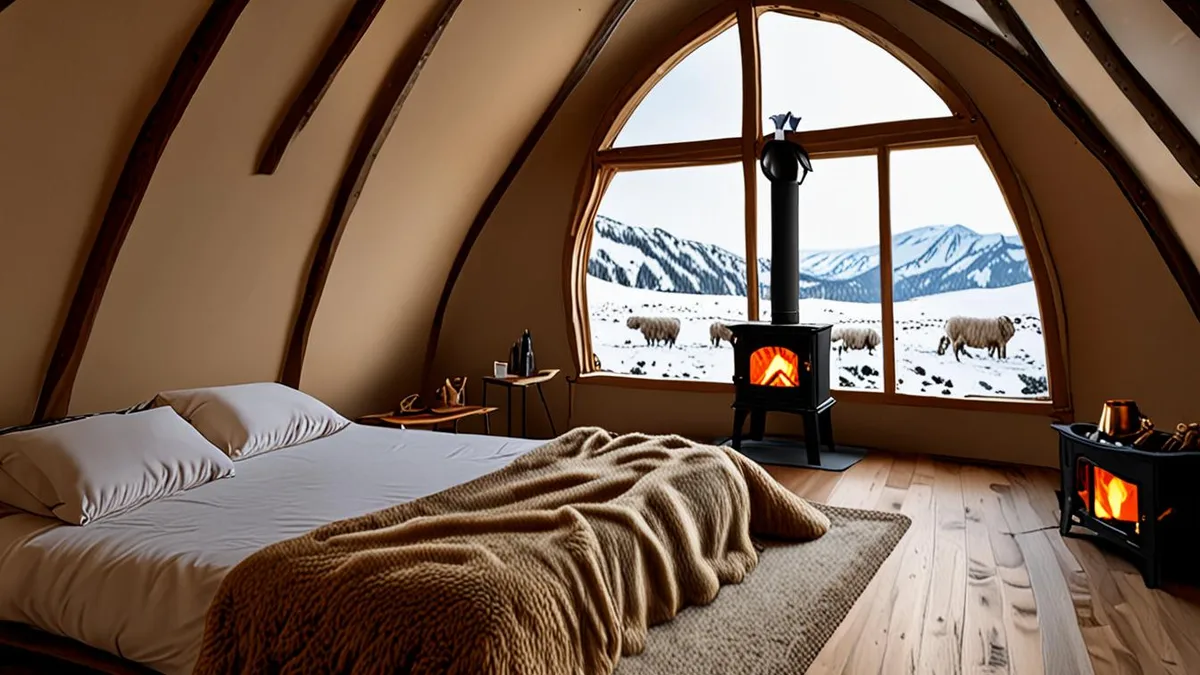
A wood stove can hold a tent at a cozy temperature all evening, but the real challenge is the stretch between midnight and sunrise. The first rule is simple: refill or stoke the stove just before you get into bed, loading enough wood to burn steadily for several hours. While you do this, follow the host’s safety instructions for ventilation. A small airflow is essential when a stove is burning, and hosts usually explain exactly which vents to leave open and how far.
Cold rising from the ground is the sneaky culprit behind many sleepless nights, even in a heated tent. Placing an insulated mat or rug under your sleeping area creates a barrier that keeps your body heat where it belongs. If the tent has a raised floor, a thick rug on top of your mat adds another layer of protection.
Small tricks that make a big difference
Fill a hot water bottle at the stove and tuck it into your sleeping bag about 15 minutes before you get in. By the time you climb in, the bag is already warm instead of slowly heating up around you. It’s a low-tech trick that works just as well in a luxury dome as in a backcountry yurt.
Resist the urge to crank the heat as high as it will go. An interior temperature around 15-18°C is the sweet spot for sleeping: warm enough to stay comfortable, cool enough that you won’t wake up sweaty and dehydrated. Let the hot water bottle and your sleeping bag handle the fine-tuning while the stove holds the baseline.
Eating and Drinking for Warmth
What you eat in the evening does more for your comfort than you might expect. Your body generates heat as it digests, so a hearty dinner works like an internal heater through the night. Plan generous, high-fat meals such as beef stew, chili, mac and cheese or a rich pasta with sausage. Fats take longer to digest, which means a slow, steady release of warmth while you sleep.
Drinks matter just as much. Ice-cold water pulls heat out of your core, so keep a thermos of something warm within reach. Tea, cocoa and mulled juice all work well, and sipping them throughout the evening keeps your hands busy and your body temperature steady. Fill a large thermos before bed so you have a warm drink ready if you wake up cold.
Alcohol is the classic mistake. It feels warming because it dilates blood vessels near your skin, but that actually pulls heat away from your core and makes you lose warmth faster. A nightcap before bed in a cold tent is a recipe for a miserable, shivering night, so save any drinks for earlier in the evening or skip them entirely.
Preparation is your friend here. Cooking in a cold tent or outdoor kitchen is nobody’s idea of fun, so do the heavy lifting at home.
- Chop all vegetables and marinate meats before you leave, so camp cooking is mostly assembly and reheating.
- Freeze stews or chili in flat, sealed bags a few days ahead; they act as ice blocks in your cooler and thaw into dinner.
- Bring one sturdy pot or Dutch oven so cleanup means a single item, not a sink full of dishes in freezing water.
- Pack no-cook backup options like bread, cheese and cured meat for nights when the stove is slow or the weather turns.
Planning Winter Activities Around Your Camp
Winter camping rewards a different rhythm than summer trips. Instead of long days on the trail, plan short outdoor sessions of 1-2 hours, then return to the heated tent for a warm-up break. A hot drink and fifteen minutes by the stove will reset your body temperature and let you head back out feeling fresh. Treat the tent as your base camp, not just your bedroom.
The good news is that winter activities don’t demand much gear. Snowshoeing, winter hiking and stargazing all work with little more than proper insulated boots and the layers you already packed. Stargazing is especially rewarding in winter, when the air is often crisp and clear, and it pairs perfectly with a thermos of something warm and a blanket.
Time your outings around the warmest hours
Temperatures typically peak around midday, which makes that window the best slot for your most active outing. Save the demanding hike or long snowshoe loop for early afternoon, and keep early morning and evening for quick trips outside or relaxed time at camp. Check the local forecast the night before so you know exactly when that warm window opens.
Manage wet gear carefully
Snow, sweat and damp air will find their way into your clothes, and wet layers are dangerous to sleep in. Keep a dry change of clothes reserved at camp and never bring damp items into the sleeping area. Hang wet gloves, socks and jackets near the stove or in a ventilated spot so they dry overnight, and start each day with dry base layers. It’s a small habit that makes the difference between a comfortable trip and a cold, clammy one.
Safety Essentials for Cold-Weather Glamping
Cold weather turns small problems into serious ones, so a little preparation goes a long way. Start 48 hours before departure: check the weather forecast and road conditions for your route and the area around camp. If a storm is moving in, have a backup plan ready, whether that’s a different date, a site closer to home or a nearby lodge. Winter roads can close quickly, and arriving late at night in freezing temperatures is not how you want to start a trip.
Before you leave, share your itinerary with someone at home, including where you’re staying and when you expect to return. In remote winter locations, phone coverage can be patchy, so someone should know where to look if they don’t hear from you.
One rule is non-negotiable: never use charcoal grills or unvented heaters inside a tent. Both release carbon monoxide, an odorless gas that builds up fast in an enclosed space and can be fatal. A wood stove is safe when installed properly with ventilation, but anything that burns fuel without a flue belongs outside, well away from the tent walls.
Finally, learn to recognize hypothermia so you can act early. Watch for:
- Intense shivering in the early stages, which then stops as the condition worsens, a sign many people mistake for the body warming up.
- Confusion, fumbling hands or poor decision-making, such as someone struggling with zippers or buttons they handled easily an hour earlier.
- Slurred speech and drowsiness, which mean the situation is urgent and you need to get the person into warmth and dry clothes immediately.
If you spot these signs, move the person to the heated tent, replace wet clothing and warm them gradually. When symptoms don’t improve quickly, seek medical help rather than waiting it out.
Wrapping Up Your Winter Glamping Trip
A cozy winter glamping trip doesn’t have to end in a miserable, sleepless night. The difference comes down to three things: picking a four-season stay that’s built for cold, packing the right layers, and managing your heat overnight so the temperature inside stays steady while you sleep. Get those basics right, and the frost outside becomes scenery instead of a threat.
It also helps to plan realistically. Book your stay a couple of months ahead for the busy season, budget for winter rates that typically run higher than summer ones, and keep your outdoor activities short, with warm-up breaks back at camp around the warmest hours of the day. Add warm food, a few safety habits and a stove-heated tent, and cold nights turn into part of the charm rather than something to endure. If you’ve tried winter glamping or have a question before your first trip, leave a comment below or share this article with a friend.