Planning your first safari usually means choosing between two very different kinds of accommodation, and the lodge vs tented camp question trips up more travelers than almost anything else. Both promise incredible wildlife, but they deliver noticeably different experiences in comfort, atmosphere, price and how close you feel to the bush. Book the wrong one for your travel style and even a great game-viewing trip can feel slightly off.
This guide breaks the decision down step by step. We’ll explain the core difference between the two stay types, what you actually get inside each, and how costs shift between peak season and the lower-priced green season. We’ll also compare wildlife access and camp size, look at when to book and where each option shines, and finish with a simple way to match stay type to the kind of traveler you are. By the end, you should know exactly which one suits your safari.
Lodge vs Tented Camp: The Core Difference
At first glance, the two stay types can look similar in photos: both sit in prime game areas, both come with meals and game drives included, and both put you close to the animals. The real difference comes down to structure and atmosphere.
A safari lodge is a permanent building. Think solid walls, a roof, air conditioning, a swimming pool, and a full-service restaurant and bar all under one structure or across a small cluster of buildings. It functions much like a boutique hotel that happens to sit next to a wildlife reserve. You get the reliability and polish of a conventional property, with staff, facilities and layouts designed around comfort.
What makes a tented camp different
A tented camp swaps concrete and brick for canvas. Each suite is a large, sturdy tent fixed on a permanent platform, often with real beds, en-suite bathrooms and furnished decks. The canvas is what changes the experience: sound travels through it, so you hear the bush around you at night, and the open design keeps you connected to the smells and rhythms of the savanna rather than sealed off from them.
Here is the key point when deciding: the choice shapes atmosphere far more than wildlife quality. Both lodges and tented camps operate inside the same game areas and follow the same park rules, so a lion sighting at dawn is not better because of where you slept. What changes is how the rest of your day feels — whether you retreat to a cool, sealed room or fall asleep listening to the night sounds just beyond the canvas.
Comfort and Design: What You Get Inside Each Stay Type
Step inside a safari lodge and you could be in a five-star hotel that happens to face the bush. Suites are typically large, with solid walls, climate control, and often a spa, gym, and multiple dining venues under one roof. For families, that extra space matters: connecting rooms, lounges for lazy afternoons, and room service make longer stays or rest days between game drives genuinely easy.
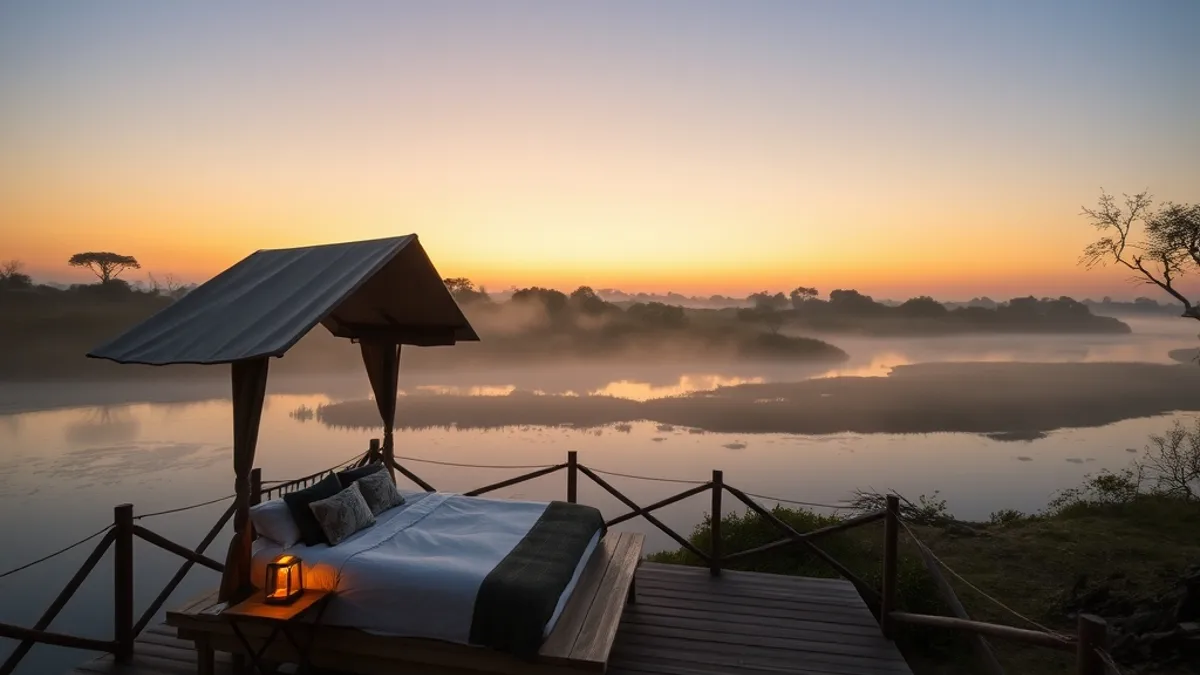
Tented camps trade some of those amenities for something harder to buy: atmosphere. A canvas suite on a wooden platform usually includes a proper bed, en-suite bathroom, and a private deck facing a waterhole or riverbed. Many camps add romantic touches like outdoor bucket showers heated by the sun, or star beds where staff roll your mattress onto the deck so you fall asleep under the Milky Way. If you want the next level of space and service in canvas, ultra-premium safari villas with full hospitality staff blur the line between the two styles entirely.
The Sounds You Sleep To
Here is the difference no brochure photo captures. Canvas walls are thin, and the bush is loud at night. Lions calling to each other a few hundred meters away, hyenas whooping, elephants cracking branches near your deck — in a tented camp, you hear all of it, clearly. Plenty of travelers say those nights are the single best part of the trip.
Lodges insulate you from that soundtrack, which is either a relief or a loss depending on who you are. If you want the sounds but not the exposure, some lodges and camps offer private villas with solid walls and open-air elements, giving you a middle path between the two styles.
Cost Comparison Across Seasons
Price is often the deciding factor, and the gap between stay types is real. Tented camps in mid-range African conservancies typically run roughly USD 300–800 per person per night, usually covering meals, game drives and park or conservancy fees. Lodges start around USD 800 and can exceed USD 2,000 per person per night at the top end, especially in famous reserves where location commands a premium.
How the green season changes the math
From November to March, the green season brings afternoon rains, lush landscapes and fewer vehicles around sightings. It also brings lower rates, with roughly 20–40% off peak pricing at both lodges and tented camps. That discount can turn a lodge that felt out of reach in July into a realistic option, and it applies across the board, so the relative price gap between the two stay types stays similar.
Where the best value hides
If you want the strongest price-to-wildlife ratio, look at the shoulder months of June and November. June sits just before the peak-season surge, with dry conditions and excellent game viewing but rates that have not yet climbed to their July–September highs. November falls right after the peak, when rains are starting but wildlife is still plentiful and camps are quieter. Booking either month often means paying closer to shoulder rates while getting near-peak sightings.
A few practical tips: always confirm what a quoted rate includes, since conservation fees and drinks policies vary widely between properties. And if a lodge’s pricing appeals to you, remember that the same logic applies worldwide — you can find similar value patterns at luxury mountain lodge estates in Australia, where off-peak seasons reward flexible travelers.
Wildlife Access and Camp Size
One of the biggest differences between a lodge and a tented camp shows up not in your room, but in the vehicle. Tented camps usually host just 8–12 tents, which keeps the whole operation small. That translates into fewer guests per game drive, roomier seats, and drivers who can change plans on the fly when a radio call comes in about a leopard two valleys over.
Lodges can hold 40 or more guests, and that scale shapes your day. Departure times tend to be fixed, vehicles fill up, and a single cheetah sighting can draw several cars from the same property. None of this ruins a safari, but if you prize quiet, small camps have a clear edge.
The good news is that the core rhythm stays the same wherever you stay. Most safari stays include two daily game drives of about 3–4 hours each, one at dawn and one in the late afternoon, when animals are most active. Between drives, you return to camp or lodge for meals and downtime.
- Smaller camps can reach tighter spots: with fewer vehicles to maneuver, guides at small tented camps can often position closer to a sighting or follow a predator moving through thicker terrain.
- Large lodges offer specialist vehicles: bigger properties sometimes run open-sided photography rigs or family-only cars, which a small camp may not have the fleet to provide.
- Private conservancies change the math: camps on private land can typically drive off-road and after dark, while those inside national parks must stick to marked tracks and daylight hours.
- Group size affects your guide relationship: at an 8–12 tent camp you will likely share the same guide for your whole stay, letting them learn your interests, from birds to big cats.
When to Book and Where Each Stay Type Shines
Timing is everything on safari, and it starts with how far ahead you book. The top safari camps and lodges often require booking 9–12 months ahead for peak-season dates, especially for the June to October window in East Africa when game viewing is at its best. The most sought-after small camps along the migration route can sell out a full year in advance, so if you have specific dates, put down your deposit early.
Peak season: small camps near the river crossings
Between July and September, hundreds of thousands of wildebeest and zebra surge across the Mara River, dodging crocodiles and predators along the way. This spectacle favors small tented camps positioned near the crossing points, because you can be among the first vehicles on site when a herd starts massing on the bank. A camp with a dozen tents simply gets you closer, faster, than a large lodge farther from the action. If this kind of exclusive, limited-access experience appeals to you, it is worth reading about Africa’s estate-style safari retreats with limited access for a sense of what small-scale properties can offer.
Green season: lodges come into their own
From November to March, the green season brings afternoon rains, lush landscapes, and lower prices. This is when lodges shine. A downpour that would dampen spirits under canvas becomes a non-event when you have a solid roof, a lounge to retreat to, and a spa treatment to fill the wet hours. Mornings are usually still clear and excellent for game drives, and many animals have young at this time of year. If you are flexible on dates, a green-season lodge stay delivers plenty of wildlife with far more comfort during the daily afternoon build-up of clouds.
Who Should Choose Which: Matching Stay Type to Traveler
The right stay type depends less on the destination and more on who is traveling. Honeymooners and photographers tend to lean toward tented camps, drawn by the privacy of a standalone canvas suite and the sheer proximity to wildlife. Falling asleep to distant lion calls, with nothing but canvas between you and the bush, is the kind of experience couples remember for decades, and photographers love stepping straight from bed onto a private deck overlooking a waterhole.
Families with young children, and anyone who needs reliable power and Wi-Fi, fit lodges better. Solid walls, climate control, and on-site facilities like pools and kids’ menus make a lodge far easier to manage with toddlers in tow. And for first-time safari-goers who feel nervous about insects, strange noises, or sleeping in the open, starting with a lodge is a sensible move. Many travelers do exactly that: one trip in a lodge, then downshift to canvas on their second safari once they know what to expect.
- Photographers should ask about charging setups: canvas suites often run on solar power with limited outlets, so confirm you can charge camera batteries overnight or through the day at the main tent.
- Families should check minimum age policies: many small tented camps set a minimum age for safety reasons, since animals can and do wander through unfenced camps, while lodges more often welcome children of any age.
- Honeymooners can request tent positioning: at small camps it is often possible to ask for the most secluded tent, farthest from the dining area, when you book rather than on arrival.
- Nervous first-timers should know staff escort rules: in unfenced tented camps, staff typically escort guests to their tents after dark, which reassures many travelers once they understand the routine.
- Remote workers should test expectations: lodges near towns or in popular conservancies are far more likely to offer dependable Wi-Fi than deep-bush tented camps, where connectivity may be limited to the main area or nonexistent.
The Bottom Line on Your Safari Stay
So, which safari stay suits you best? If you want solid walls, space to spread out, and amenities that keep families comfortable, a lodge is the natural fit. If you’d rather fall asleep to lions calling outside your canvas and feel close to the bush all day, a tented camp will likely steal your heart.
Remember that season and budget matter just as much as stay type. The green season can cut rates by roughly 20–40% at both, and whichever you choose, booking 9–12 months ahead secures the best camps in peak season. There’s no wrong answer here, only the experience you want most. If this helped you decide, share it with your travel companions or leave a comment with your own safari pick.